Hospitality & Leisure
Margins under strain, footfall that varies threefold from one day to the next, and point-of-sale systems that have become a target. We industrialise journey fluidity, dynamic pricing and till security, with hotel groups, leisure parks and food service operators.

Cut the wait, fill at the right price, hold the tills.
Three subjects come up in every conversation with a hotel operator, a park or a caterer. They drive everything else: what the guest feels, what the day earns, and what has to hold on a busy Saturday.
Cutting actual waiting time
Flow analysis, slot adjustment, checkout without keying. Waiting time is what guests talk about on the way out: it is also the variable that moves fastest once you equip it.
Filling at the right price, not the largest volume
Pricing that follows demand across the room, the cover and the ride, keeping margin as the criterion. Occupancy raised by cutting prices improves a dashboard, not a result.
Holding the tills on peak days
Point-of-sale networks separated from the rest of the estate, continuity rehearsed, and payment security requirements held continuously. A busy Saturday is not the moment to discover a gap.
Solutions
Guest journey fluidity
(01)Queues, fixed slots, and an identical experience whatever the guest profile.
Real-time flow analysis, adjustment of bookable slots, and offers matched to the moment of the visit.
Food service checkout
(02)Keying errors at the till, queues at peak hours, and labour costs that weigh.
Visual tray recognition, an order assembled without keying and immediate payment, as deployed at Compass Group.
Guest application
(03)A purchase journey fragmented across the site, the app and the point of sale, with heavy drop-off.
An application wired into your reservation and point-of-sale systems, with payment and order tracking in one place.
Dynamic pricing
(04)Fixed prices on highly volatile slots, and margins eroding without a visible cause.
A pricing engine following demand across the room, the cover and the ride, with margin as the criterion rather than volume.
Point-of-sale security
(05)Exposed till systems, sensitive guest data, and a sector that has become a regular target.
Separation of point-of-sale networks, payment security requirements held continuously, and a continuity plan replayed.
Stay carbon measurement
(06)A footprint hard to establish per stay, with guests and corporate buyers now asking for it.
Calculation per stay and per cover on the items that actually weigh, travel, food and site energy, rather than an average.
Client cases
A few projects run with hotel groups, leisure parks and food service operators.
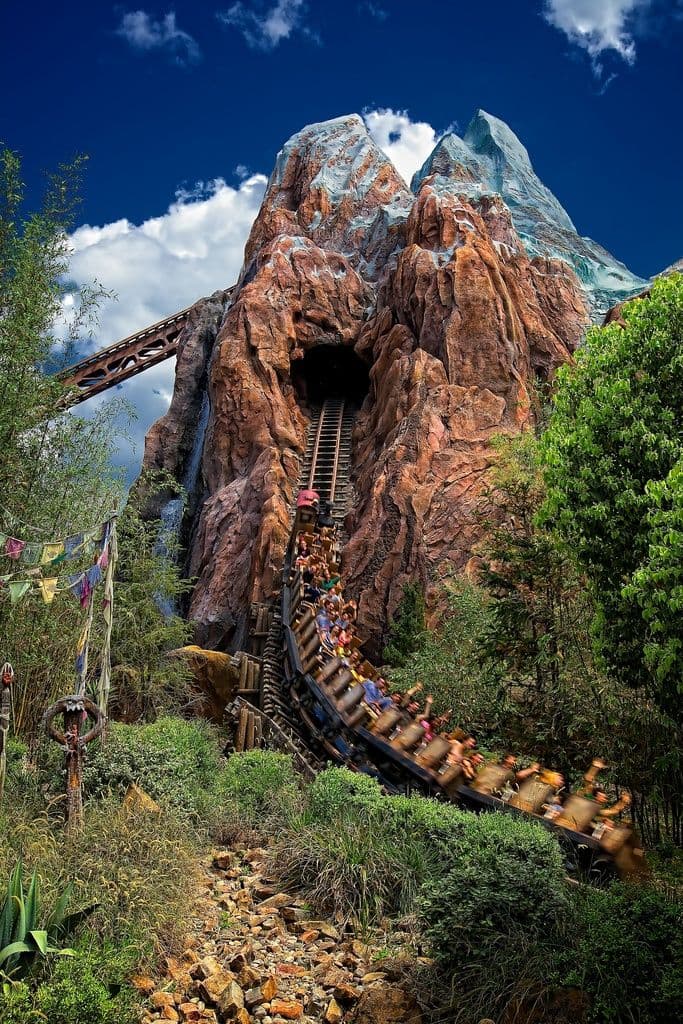 Hospitality
AI FastPass & Mobile Order
Disneyland Paris
We analyse video feeds with AI to optimise attraction access and deliver personalised offers in real time.
 Hospitality
Augmented CIO, GenAI software factory data
B&B Hotels
We augmented their software factory with GenAI agents, secured it (RLS) and governed it, then handed it back to the teams for build and run.
 Hospitality
Foodies, AI-powered self-checkouts
Compass Group
Computer vision recognises trays and enables contactless payment, with no manual entry and no queue.
Compliance & standards
NIS2
Essential tourism entities
AI Act
Recommendation & guest profiling
GDPR
Guest data & cookies
PCI-DSS
Payment security
CSRD
Scope 3 sustainability reporting
RGAA
Digital accessibility
ePrivacy
Marketing consent
Stack & partners
Mistral AI
European sovereign LLM
YOLO / Ultralytics
Catering computer vision
React Native / Cordova
Native mobile apps
Cloud
Microsoft Azure · AWS · GCP
Payment
Stripe · Adyen · Worldline
PMS / POS
Opera, Mews, Lightspeed

Let's talk about your hospitality roadmap
An hour to test your waiting time, occupancy and till security challenges against what we have already put into production elsewhere.
Frequently asked questions
Through the interfaces your tools already expose, without replacing them. The analysis layer runs inside your perimeter or in sovereign cloud, and falls back to your business rules if it becomes unavailable: a point of sale does not stop because a model stopped answering. The real preparatory work is elsewhere, reconciling your product, slot and site reference data, which rarely carries the same identifiers across reservation, till and accounting.
A clarification first: NIS 2 applies to you, the regulated entity, not to us, and being in scope is checked property by property rather than at sector level. Where you are in scope, we separate point-of-sale networks from the rest of the estate, produce the incident register and risk analysis the regulator expects, and replay the continuity plan. On payment flows, the card security standard adds its own requirements, and those are held continuously rather than ahead of an audit.
Three documented projects. At Disneyland Paris, video flow analysis applied to ride access cut waiting by 58% and lifted satisfaction by 26 points. At Compass Group, visual tray recognition cut time at the till by 82% and keying errors by 36%. At B&B Hotels, introducing agents into the development chain doubled delivery velocity. We would rather offer those three cases than a sector average: your footfall and your starting point will decide your own figures.
A recommendation system falls under limited risk in the European AI regulation, not high risk: the obligations are about transparency, not certification. In practice, a guest interacting with a machine must know it, and be able to reach a human. The real point of attention is elsewhere: recommendations that consistently push the same segment towards the most expensive offers show up in the data before they show up in reputation. We monitor recommendation diversity as closely as performance.
Framing takes 2 to 6 weeks depending on scope and the number of systems to connect. A first version tested at one point of sale or one attraction follows in 4 to 10 weeks, depending on the quality of your footfall data. A multi-site rollout, including training the operations teams, runs to 3 to 6 months. These ranges are the ones we apply everywhere, and each comes with what makes it vary.
Per stay and per cover, across the three items that actually weigh: guest travel, food, and site energy. An average per room night is useless for deciding, because it hides exactly the variation you can act on. On regulatory reporting, the Omnibus directive of 18 March 2026 raised the thresholds to one thousand employees and four hundred and fifty million euros of revenue: the first question is whether you are still in scope, and many operators no longer are.