Data quality & reference data
A golden record you can trust and quality measured continuously, because data whose reliability nobody knows is data nobody should decide on.
Quality that goes unmeasured degrades silently.
Duplicates, missing fields, inconsistent formats: quality degrades with nothing to signal it. Decisions and models inherit those defects, and generative AI amplifies them instead of revealing them.
Making data reliable comes down to two things. Reconciling reference data into a golden record every domain shares. And turning quality into a continuous measurement rather than an occasional audit, with remediation attached.
What we do
Four workstreams so a figure arrives with a known level of reliability.
MDM and golden record
Scattered records of the same entity are reconciled into a single version. That is what turns a check into a lookup rather than an investigation.
on the entities shared across domains: customer, product, supplier
- Business key and matching rules
- Survivorship rule, field by field
- Human arbitration on doubtful cases
Automated checks
Completeness, duplicates, formats and freshness are verified on every run, against thresholds agreed before go-live.
thresholds negotiated with the business, not set by default
- Completeness, duplicates, formats
- Freshness measured, never assumed
- The flow stops rather than passes
Tooled remediation
A detected gap triggers a traced correction rather than a ticket. What is fixed by hand comes back, what is fixed in the chain does not.
the fix goes back to the source, not to the dashboard
- Correction carried in the chain
- Log of every correction
- Recurrence rate tracked
Data contracts
Sources, freshness, ranges and uniqueness are written before any use. A broken expectation stops the flow rather than letting it move downstream.
one contract per flow, versioned with the code that produces it
- Sources, freshness, ranges, uniqueness
- A named owner per domain
- Breach notified to the consumer
What you get
Quality audit
A quantified survey by domain: sources inventoried, gaps ranked by value and by risk, and what they cost downstream. Every gap carries its domain, its owner and its place in the queue.
Single reference
MDM in place and the golden record populated, with the reconciliation rules written down: which source wins on which attribute, how a duplicate is closed, and what happens when two systems disagree.
Continuous quality
Automated checks in production (sources, freshness, ranges, uniqueness), thresholds set, remediation wired in and a named owner per domain. A breach is no longer discovered in a report: it is notified to the data consumer.
Quality is measured, not assumed
Quality that goes unmeasured degrades silently, and generative AI amplifies the defect instead of revealing it. Here is what the foundation watches continuously, and what fires when something drifts.
Quality alerts
Completeness, duplicates, formats and freshness are checked on every run, against thresholds agreed before go-live. Falling below one raises an alert, rather than a discovery three months later.
Anomaly detection
Volume, distribution and latency of each flow are compared with their own history. A reading outside the expected band surfaces before the data reaches a dashboard or a model.
Orchestrated pipelines
Ingestion, checks, transformation and publication run in an explicit order. A failing check stops the chain at its step instead of letting the data through downstream.
Three principles we apply
An alert has to block something
A check that only logs gets ignored within three weeks. For every test, decide what it prevents from moving downstream, or do not write it.
Freshness before volume
A complete flow that is two days old does more damage than a partial one that is on time, because nothing signals its age. Measure the last update first.
An owner before a rule
A quality rule with no name against it never gets fixed, only worked around. Name the domain owner before writing the first check.
Reference data that holds

Fraud caught in real time, KYC cut by more than half
+40% fraud detection · −60% KYC time
Detect fraud on massive volumes in real time, shorten a KYC slowed by scattered customer data, and make regulatory data reliable, under heavy compliance and sovereignty constraints.
A governed data foundation with MDM for a single customer reference and continuously measured quality, detection models wired into the flows, and a data copilot whose every answer carries its sources.

A data software factory augmented by GenAI agents
×2 delivery velocity · 100% Row Level Security coverage
A rising volume of business requests that data delivery could no longer absorb, and a data estate piling up, with no shared semantic model and no end-to-end security.
A structuring semantic model, shared standards and Row Level Security on sensitive domains, with specialised agents across the cycle and skills transfer from the first sprint.
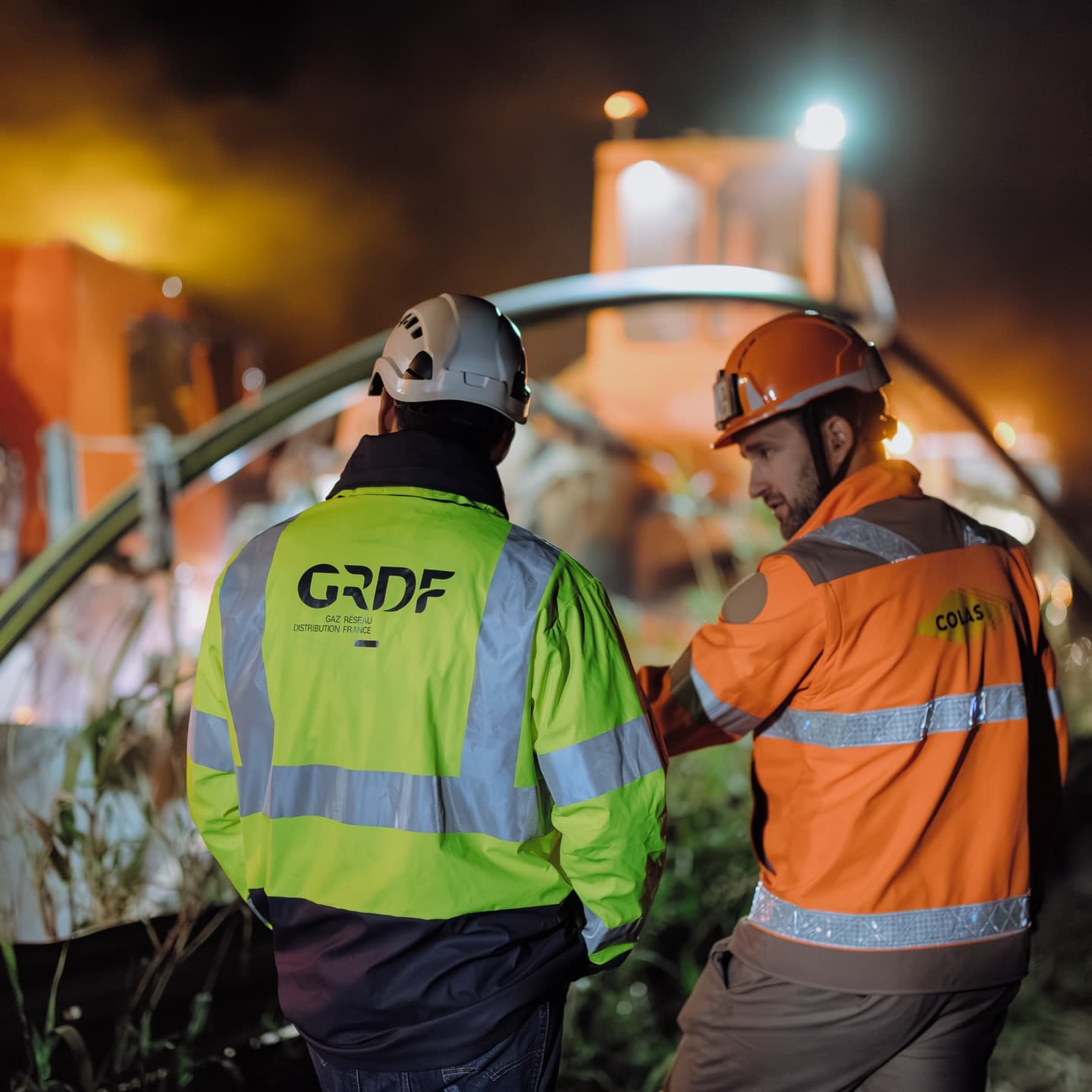
Business rules made readable and testable again
483 rules reimplemented · 53 SAP flows integrated
Rebuild the time-management rules engine behind the schedules, planning and payroll of 12,000 employees, with hundreds of inherited rules and dozens of SAP flows whose errors propagate downstream.
Every rule specified in executable form rather than written in prose, the implementation generated under engineer review, non-regression coverage produced at the same pace, and SAP flows validated one by one before production.

DevOps and DataOps industrialised on Azure
Automated pipelines · Governed cloud platform
Data flows and deployments handled without a shared chain, where each change had to be replayed by hand and nothing guaranteed two environments behaved the same.
A DevOps and DataOps chain built on Azure: industrialised pipelines, environments described as code, deployments made reproducible rather than replayed.
Cinké Évolution : field operations steered by data
Power BI · Field operations planned
Regional teams planning field operations without a shared view of the data, each directorate preparing its schedule from its own extracts.
An agile visualisation tool that turns operational data into a single steering view, so scheduling runs on the same figures across directorates.
Insights & Perspectives

Beyond the algorithm: six hidden obstacles to AI success
Most AI programmes do not fail on the model. They fail on the six obstacles underneath it, that nobody measures until it is late.

From data to smart data
Smart data extends big data by delivering readable, actionable insight from collection onward, rather than after weeks of reprocessing.
The data lake and its benefits
A repository able to store data of any format, the three Vs of big data, and what sets it apart from a data warehouse.
The rest of the data journey



Make your figures defensible
A quality audit, a single reference and checks that run continuously.
Frequently asked questions
The single reconciled version of a business entity, a customer for instance, across every system holding a partial one. Without it, each domain works from its own truth.
By running automated checks continuously rather than auditing occasionally: completeness, duplicates, formats, freshness. Unmeasured quality degrades with nothing to signal it.
Freshness. A complete flow that is two days old does more damage than a partial one that is on time, because nothing signals its age to whoever uses it.
To write down what is guaranteed before anyone depends on it: sources, freshness, ranges, uniqueness. What is not guaranteed there will not be guaranteed later, and a broken expectation stops the flow.
Yes, and before the first rule is written. A quality rule with no name against it never gets fixed, only worked around.
At the source whenever possible, downstream only when the source is not yours. A downstream fix has to be replayed on every load, it duplicates across every pipeline consuming the same data, and it eventually diverges from one pipeline to the next without anyone noticing. When the source is a packaged system or a partner beyond reach, the correction happens once, at the entry point, and is recorded as such: what was corrected, under which rule, and since when.
Twelve to eighteen months if nothing watches its quality, and that horizon barely depends on how well the initial work was done. Reference data degrades through the cases nobody anticipated: a merger of entities, a new capture channel, a partner changing format. That is why the checks that measure quality ship with the reference data rather than after it: they do not exist to prove the work was done, they exist to show the drift while it is still maintenance.