Transport & Logistics
A delay announced too late costs more than the delay itself. We equip delay forecasting, maintenance before failure and carbon measurement, alongside rail operators, urban networks and logistics providers.
Hold the schedule, hold the fleet, hold the trail.
Three subjects come up in every conversation with a carrier or a logistics operator. They drive everything else: what gets promised to the customer, what rolls tomorrow morning, and what will have to be proven.
Promising an arrival time that holds
Models combining traffic, weather, hub dwell times and onboard telemetry to warn before the delay is observed. The point is not average accuracy, it is how many customers were told in time.
Taking vehicles off the road at the right moment
Driving and workshop data flag wear before failure, and the work order goes straight into your maintenance system. Planned downtime costs a fraction of a breakdown in service.
Measuring carbon shipment by shipment
A per-shipment calculation using the GLEC method, rather than an average spread pro rata. That level of detail is what makes a modal shift arguable in front of a customer and in front of a board.
Client cases
A few projects run with rail operators, urban transport networks and temperature-controlled logistics providers.
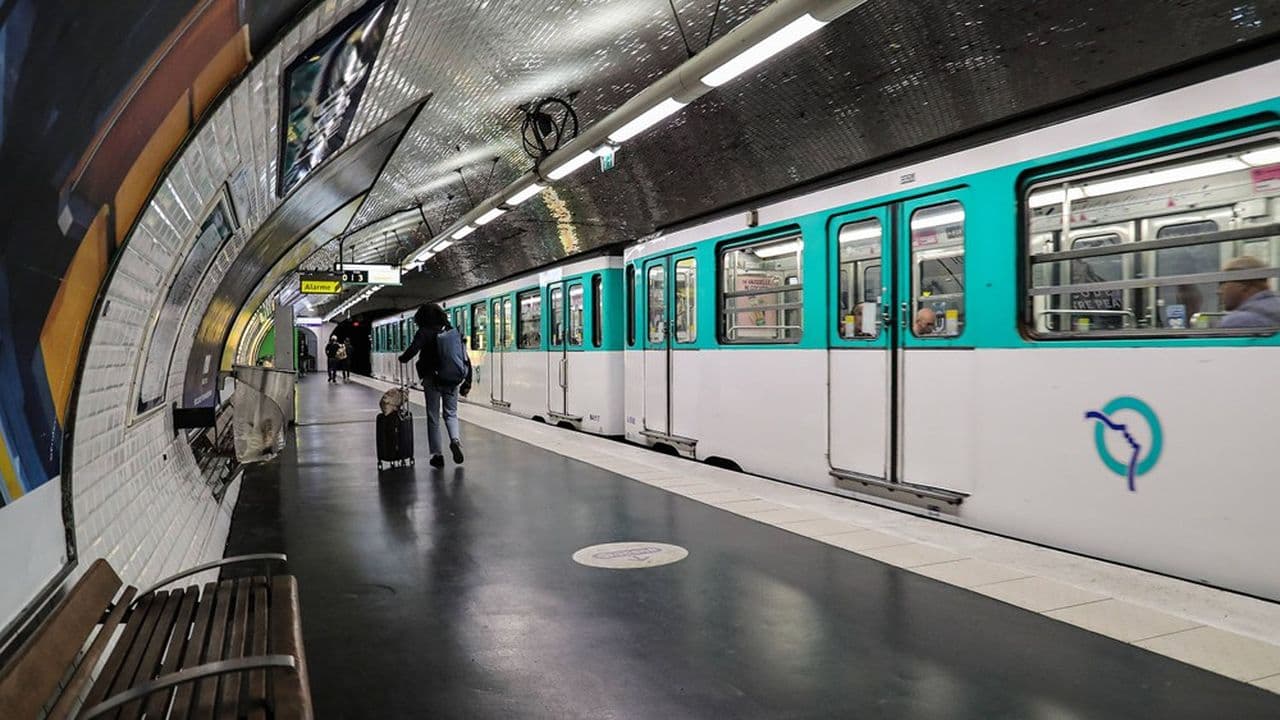 Transport & Logistics
Test & reporting: rail maintenance
RATP
For this urban public-transport operator, we designed interactive supervision apps and a 4K interactive dashboard from scratch for the rail maintenance workshops.
 Transport & Logistics
Critical architecture audit: rail traffic
SNCF
For this major rail operator, we ran an architecture audit, set up Dynatrace instrumentation and led the root cause analysis to secure national rail traffic.
 Transport & Logistics
Augmented CIO: GenAI at the heart of the SDLC
STEF
A sovereign hybrid LLM gateway deployed through a three-wave approach (MVP, Scale, Run) and compliant with the AI Act, NIS 2 and DORA.
 Transport & Logistics
Digital transformation: Soon & Connect
STEF
A Shared Services Centre spanning France and Portugal, driven by design thinking and a BUS architecture for temperature-controlled logistics.
Solutions
Fleet management
(01)Mixed fleets, fuel consumption poorly tracked, and maintenance that always arrives after the breakdown.
Telematics, driving data and workshop history brought together to flag wear before failure, with the work order written into your maintenance system.
Last-mile optimisation
(02)Fragmented deliveries, low load factors, and low-emission zones tightening every year.
Route planning that trades off time, emissions and access restrictions, and re-plans during the day as incidents come in.
Arrival times and visibility
(03)Partial visibility across modes, and a promised arrival time nobody believes any more.
A forecast combining traffic, weather, hub dwell times and onboard sensors, warning the customer before the delay is observed.
Demand forecasting
(04)Strong seasonality, disruptions that are hard to model, and a capacity plan rebuilt by hand.
Models combining history and scenarios, for a capacity plan per mode that updates rather than gets renegotiated.
Cybersecurity and continuity
(05)A sector classed as essential under NIS2, exposed onboard systems, and continuity rarely rehearsed.
Behavioural detection on network flows, separation of office and onboard networks, and a continuity plan replayed rather than drafted.
Transport carbon measurement
(06)Scope 3 that is hard to compute, and customers now asking for the footprint of their own flows.
Per-shipment calculation using the GLEC method, modal shift comparison, and tracking of fleet electrification.
Compliance & standards
NIS2
Essential transport sector
AI Act
Routing & ETA models, limited risk
MDS
EU Mobility Data Space
CSRD
Scope 3 sustainability reporting
IATA
Air and cargo standards
IMO 2030
Maritime decarbonisation
eFTI
Electronic freight transport information
RGPD
Driver and customer data
Stack & partners
Mistral AI
Sovereign European LLM
Anthropic Claude
Modèles frontière via gateway
Mapping & routing
HERE · Mapbox · OSRM
Time-series & IoT
TimescaleDB · Kafka · MQTT
TMS / WMS
SAP TM · Oracle TM · Manhattan · Generix
Mobility Data Space
European MDS connectors
Our ideas
A guide to service orchestration and automation platforms
Workflows, provisioning, data pipelines: how service orchestration and automation platforms (SOAPs) coordinate hybrid infrastructure and turn automation into a competitive advantage.
Read the article

Let's talk about your transport roadmap
An hour to test your scheduling, fleet and carbon measurement challenges against what we have already put into production elsewhere.
Frequently asked questions
Read-only first, replacing nothing. We go through the interfaces your tools already expose, and the analysis layer runs inside your perimeter or in sovereign cloud depending on how sensitive the data is. When a model becomes unavailable, the chain falls back to your business rules rather than stopping. What takes time is almost never the interface: it is reconciling your reference data, where the same site, vehicle or handling unit rarely carries the same identifier from one system to the next.
A clarification first: NIS 2 applies to you, the regulated entity, not to us. A supplier cannot make compliance native; it can make it demonstrable. ANSSI counts around fifteen thousand entities in scope in France across eighteen sectors, against five hundred under NIS 1, and transport is among them. In practice we separate office and onboard networks, produce the incident register and risk analysis the regulator expects, and replay the continuity plan rather than document it.
Through data space connectors rather than one-off extracts. Your mobility flows are exchanged in a common format with local authorities, operators and partners, and the European data regulation now frames what each party may reuse. The first thing to settle is not technical: it is deciding which data you share, at what granularity, and what you get back. No transfer outside the European Union takes place without your explicit agreement.
Framing takes 2 to 6 weeks depending on scope and the number of systems to connect. A first version tested on one depot or pilot line follows in 4 to 10 weeks, depending on the quality of your route data, which is almost always the deciding factor. A multi-site rollout, including dispatcher training, runs to 3 to 6 months. These ranges are the ones we apply everywhere, and each comes with what makes it vary: a duration announced without its variable only exists to be exceeded.
We compute the footprint shipment by shipment using the GLEC method, then aggregate it across the upstream and downstream scope 3 categories. That level of detail serves two purposes: answering a customer who wants the footprint of their own flows, and comparing a modal shift on figures rather than on intent. On regulatory reporting, the Omnibus directive of 18 March 2026 raised the thresholds to one thousand employees and four hundred and fifty million euros of revenue: the first question is therefore whether you are still in scope, and the answer has changed for many players in the sector.