CNFPT: Application Performance Centre
Securing the performance of local government civil service applications.
42 applications used daily by over 120,000 local government staff for training, examination registration and document management.
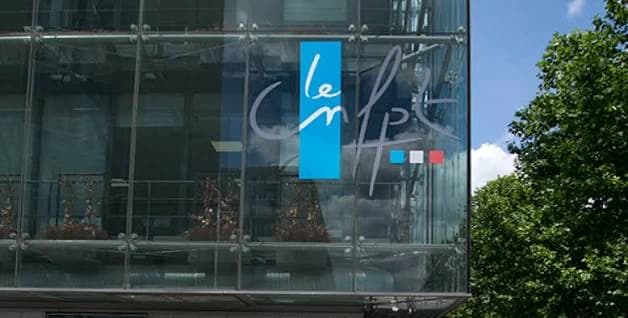
Project Context
The CNFPT operates an application estate critical to the local government civil service: continuing training portal, examination registration platform, staff portal, document management. Every outage directly affects the daily work of over 120,000 local government staff.
The legacy monitoring tooling could not correlate signals across infrastructure, application and user experience. Incidents were identified late, sometimes by the staff themselves, and root cause diagnosis took several hours.
The challenge: creating a dedicated Application Performance Centre, with systematic instrumentation, measurable SLOs, automated runbooks and compliant RGAA accessibility, while training the CNFPT teams to durably embed SRE practice in governance.
Strategic Objectives
Application performance
Secure the performance of the 42 CNFPT applications used by over 120,000 local government staff: strengthened SLAs, proactive alerting and the capacity to absorb peaks linked to examination and training periods.
RGAA compliance
Guarantee the compliance of public applications with RGAA and WCAG 2.1 AA requirements, with an accessibility score maintained above 95% and automated regression tracking on every release.
Continuity of public service
Guarantee service continuity on high-stakes applications (examination registration, continuing training, staff portal) where every outage has a direct impact on the local government civil service.
Solutions Delivered by Adservio
Adservio deployed a cross-functional team (SRE Lead, Performance Engineers, Accessibility Champion, SRE Coach) to structure the practice over 24 months.
Application Performance Centre
Creation of a dedicated APM competency centre for the CNFPT, with a Dynatrace + Grafana + OpenTelemetry deployment and systematic instrumentation of the 42 critical applications across all environments.
SLOs & runbooks
Definition of SLOs per business journey (registration, training, staff), formalisation of incident runbooks by criticality, set-up of 24/7 ops paging and automation of remediation actions for recurring incidents.
Industrialised load testing
Industrialisation of load tests with K6 and JMeter, run in CI/CD on every release, with blocking non-regression thresholds and anticipation of peaks linked to examination registration campaigns.
RGAA & WCAG accessibility
Complete RGAA audit, update of critical UI components, integration of automated accessibility tests (axe-core, Pa11y) in CI/CD to prevent regressions, and training of the development teams.
Coaching & autonomy
Training of the CNFPT teams on SRE practices, support in taking ownership of the APM stack, facilitation of a community of practice, and creation of living documentation to sustain autonomy.
42 applications, 120,000 staff:
unified monitoring, RGAA compliant.
Measurable SLOs per business journey, proactive alerting on drift, automated runbooks, RGAA compliance tracked in CI/CD: performance is a discipline, not an annual audit.
Results
Average incident remediation time down from 28 to 12 minutes.
SLOs met on the critical journeys over 18 consecutive months.
Accessibility maintained above 95%, compliant with RGAA 4 and WCAG 2.1 AA.
Critical applications instrumented and monitored continuously.
Examination campaign traffic peaks absorbed with no degradation.
Local government staff using the applications daily.
Impact
MTTR −58%
Average incident remediation time down from 28 to 12 minutes thanks to unified observability and automated runbooks. Critical incidents are resolved in under 4 hours in 99% of cases.
SLO 99.9% achieved
On the critical journeys (examination registration, continuing training, staff portal), the availability SLOs are met and exceeded over 18 consecutive months, with no degradation during seasonal peaks.
RGAA 96%
RGAA accessibility score maintained above 95% across all public applications, compliant with RGAA 4 and WCAG 2.1 AA requirements: public service accessible to all staff.
Capacity absorbed
The load peaks of examination campaigns (an ×8 increase in traffic over a few hours) are now absorbed without user degradation: no more inaccessible portals on the day.
Team autonomy
The CNFPT teams now run the entire APM stack autonomously, with SLOs renegotiated annually with the business and Adservio coaching now occasional.
DGFiP audit passed
Internal audit of the application scope passed without reservation, with a performance and accessibility approach recognised as a benchmark in the local government civil service.
More Client Work

EBIOS RM risk analysis & GDPR

Building an educational nonprofit information system

Cinké Évolution : data visualisation steering
TIV Test & Reporting: rail maintenance

Augmented CIO: GenAI in the data software factory

Augmented CIO: GenAI at the heart of the SDLC

Augmented CIO: a sovereign AI foundation across the SDLC

INES programme: AI-augmented depositary control

Interbank flows & SAP S/4HANA modernisation

360° Performance & Observability

Dentaline: deep learning on panoramic X-rays

AI FastPass & Mobile Order

DevOps automation for life insurance

EBIOS RM risk analysis on Azure
SIAG modernisation via SAP Fiori

DevOps & DataOps: Azure cloud migration

Redesign & digital maintenance: web performance

Fabrik Digitale: cloud-native on Azure

GOC 2.0 project: critical architecture audit

Digital transformation: Soon & Connect
SpeedBooking: a platform shipped for 600+ hotels
A time-management rules engine rebuilt with no regression

A Workday migration mapping accelerated by AI

Real-time fraud detection and faster KYC
Industrialise the performance of your public service
Let's discuss your SRE, RGAA accessibility and observability challenges. An Adservio expert gets back to you within 24h.